TO PLACE AN ORDER IN USA/CANADA/SOUTH AMERICA – CLICK HERE




RTP Performance Sleds
Collision King II
£1,600.00
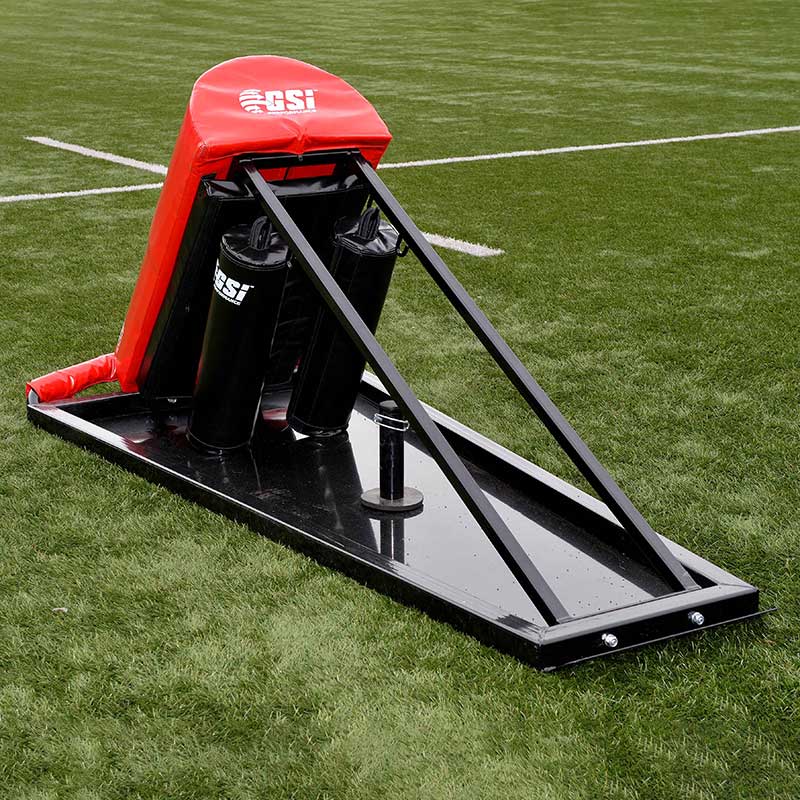
The Collision King II is part of the GSI Performance Technical Training Range and can be used in isolation or as part of the full system of products. This piece of equipment has been specifically designed to isolate a key area in the development of accurate body height and leg-drive. It can also be used in drills relating to dynamic feet movement into the breakdown runway. Training with this piece of equipment helps you develop and maintain accurate body height, hip-sink, leg-drive, speed, balance and accuracy of body movement into the attacking and defensive breakdown.
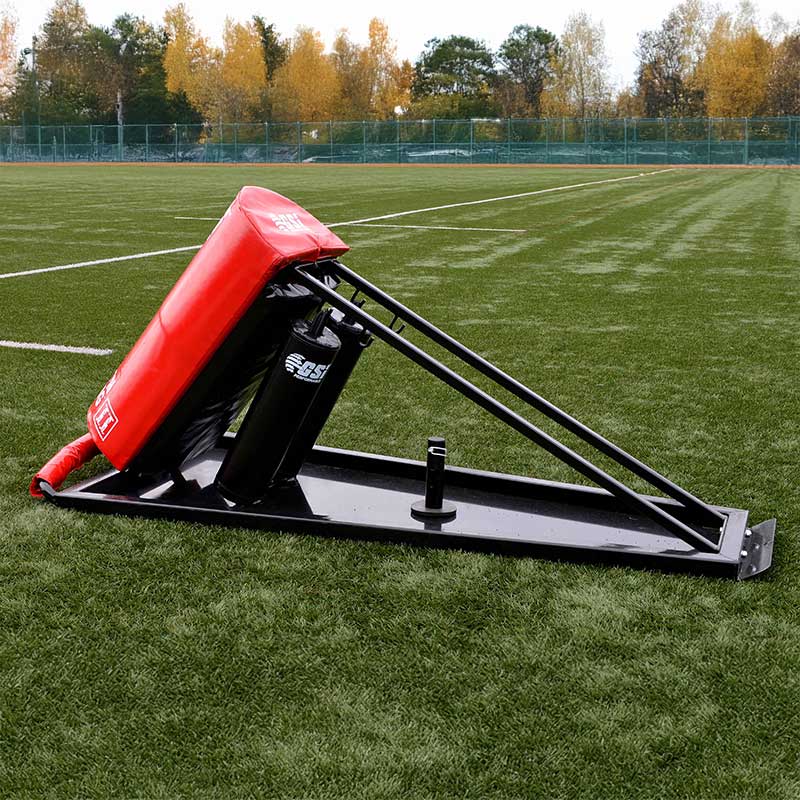
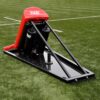
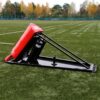
- The Collision King II has been specifically engineered in an arrowhead design so that if the player does not make connection with the contact pad in the correct technical position, the impact will be lessened through the sled. Encouraging players to make contact from the hindmost foot and hit square on is a key coaching point. If the player makes contact with the contact pad from the side, the sled will slide away from the player resulting in a failure to get direct impact on the pad.
- The Collision King II contact pad sits at a specific angle on the front of the sled. It is designed to force the player up and over their initial hit. The player must work on staying in the contact point and not “slipping up”, requiring strong core and technique, and also using head movement and grips to stay strong through the collision.
- The player must work on leg drive and leg speed within the collision. The contact pad sits at a specific angle to allow for clear knee lift and leg drive – the player can vary their collision to an impact through the sled, or an impact resulting in a strong unmovable finishing position.
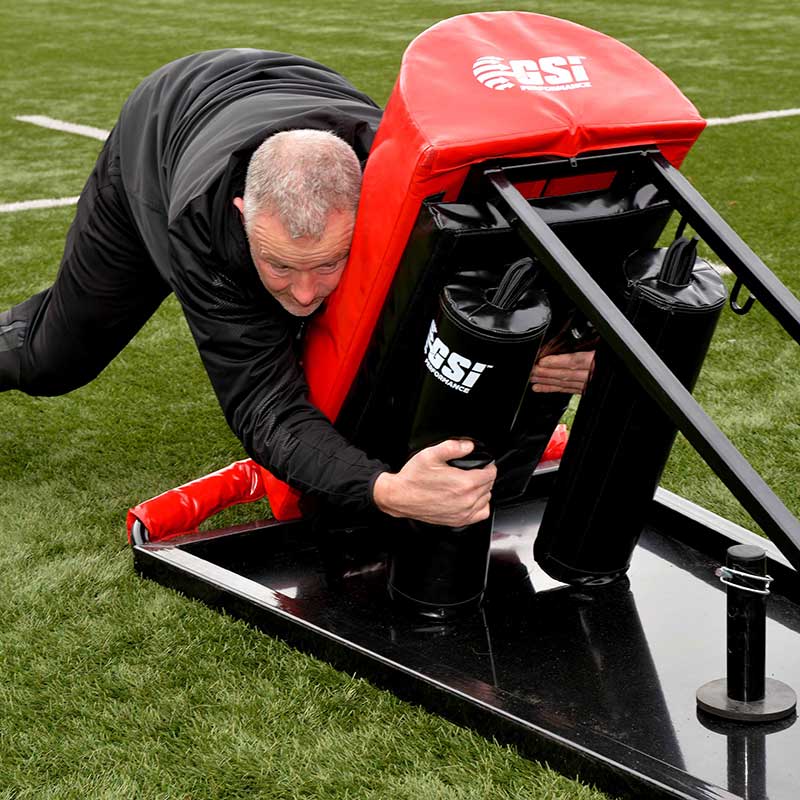
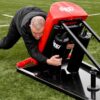
- Once the player has made initial contact they can make a choice on different types of hand placement around The Collision King II front pad.
1. under grip on the grip bar below the front pad
2. punch hands through the initial contact point to wrap around main front pad
3. punch through to the grip cylinder pads that are positioned in behind the front pad
- Pads on the “grip bar” and grip cylinders are designed to rotate, so the player must work on strong hand placement while keeping the correct body position throughout the exercise.
- The Collision King II “grip cylinders” can be positioned so that they sit at different angles from the contact pad – this then allows individual players to work on different lengths of grip and enables the “grip cylinders” to be moved forward or back. The cylinders have bungees running through them, so when the player grips the cylinder it can be pulled towards the frontal pad, bringing about the training affect of attacking the back of the opposition players hamstring/upper leg in live play.
- The Collision King II weighs 80kg. Olympic weight plates can be added to increase the weight at the contact pad end of the machine which helps replicate the average weight of the opposition (the plates fit onto a specific weight plate fitting).
The base plate on The Collision King II can be manufactured with contoured or smooth finish so that it causes resistance against the grass if needed, thus controlling the pace of the machine along with the added weight. This base plate can also be designed in a smooth finish so that the machine can be used on synthetic pitches (3G and Astro) as well as grass.
COLLISION KING II
208cm (L) x 88cm (W) x 92cm (H)
Weight: 80kg
82in (L) x 35in (W) x 36in (H)
Weight: 176lbs
Coaching the collision area has taken many different forms over past years, from “live play” to the use of shields, tackle bags and suits – all these have merit. Collision King II can be used as a control method, bringing around the desired technical training effects of the collision, looking specifically at areas that are an individual player micro-skill work on:
- Consistent body height (80mins)
- Leg drive & leg speed
- Hip-sink
- Staying on your feet
- Working to stay strong and re-shape within the collision
- Strong hand grip placement around, under and within the collision area
- Head movement within the collision (Arrowhead)
- Individual contact technique
- Two player contact technique
- Collision and clearance technique
- Counter ruck technique
As a Coach, initially start the players approx. 1m away from the sled. Let them get a feel for the sled, the body height required, the range of grips in and around the machine, the weight of the machine and the way the machine moves along the ground etc. After that you can introduce different entry points and approach speeds (straight on through gate, coming back and round into collision, tight angles, 1-man collision, 2-man collision, 3-man collision (ball carrier + 2 clean out)).
- Let the players know why the base plate is in an arrowhead i.e. you can Hit-Grip-Twist and Lift the sled and it will not topple over – if the base plate had been rectangular, it would just fall to one side or the other.
- When the player is confident with the sled, make sure it has sufficient weight on it to bring around the desired training effect for some of your more powerful players (weight will have to be added, ideally Olympic discs 10kg or 20kg, power bags or a coach). The starting weight of the Collision King II is 80kg.
- Get the player to understand the “sweet spot” (middle third of the bag) on the “contact pad”, especially when it is a single player hit. Work to get your contact shoulder into position. Players have to work on dropping body height before making contact with the “sweet spot”.
- Make sure the “grip bar” is set at the correct distance for the players arm length. If you just want to set the “grip bar” for multi-player use i.e. open play set up around the field, I have found that three quarter to fully deployed down the spindle suits all. If you take the “grip bar” back to its furthest position you can also work on the player clamping right around the bag.
- If you are working in pairs hitting the machine, they must initially work on getting low, and at all times “chase feet and hip-sink”, keep eyes up and looking through the target so they have accurate hand placement and grip – they must communicate with each other.
- The three key points to consistently observe:
-
- outstanding body height and accuracy of hit (everything comes down the tunnel)
- strong hand grip – chase feet, after collision stay strong then next job!
- Hit-Grip-Feet should all blend into one continual dynamic movement


